After spending over a year using the La Spaziale Lucca A53 Mini, both at home and at live espresso bar events, we learned a lot about what works (and what doesn’t) when you’re relying on a prosumer machine in real-world conditions.
After running into a repair situation with the Mini, we made a decision:
Instead of replacing it, we upgraded.
We purchased the La Spaziale Lucca A53 Pro as our new primary machine and moved the Mini into a backup role for events.
The A53 Pro sits in an interesting category: it’s still compact and approachable, but it leans much closer to a true commercial machine in terms of performance, reliability, and workflow. You can also get a plumbed version.
Here’s our experience so far, what makes the Pro different from the Mini, and who we think this machine is actually for.
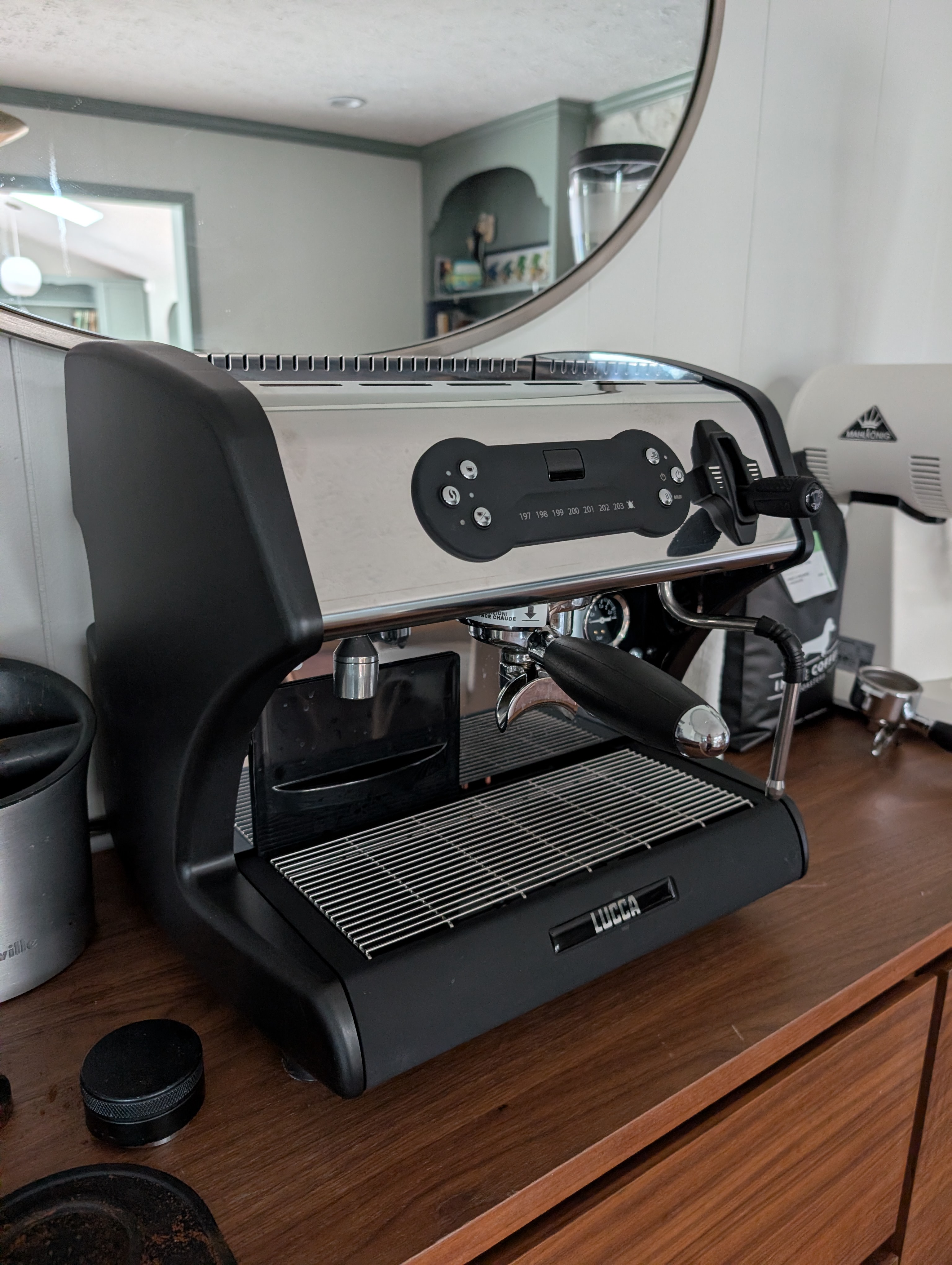
First Impressions of the La Spaziale Lucca A53 Pro: This Feels Like a Real Coffee Shop Machine
The jump from the A53 Mini to the A53 Pro is not subtle.
While the Mini felt like a very capable “prosumer” machine, the Pro immediately feels like something built for daily, consistent service.
1. Built for Stability, Not Just Performance
The biggest difference you notice right away is how stable everything feels:
- More consistent pressure
- More reliable temperature control
- Smoother workflow when making drinks back-to-back
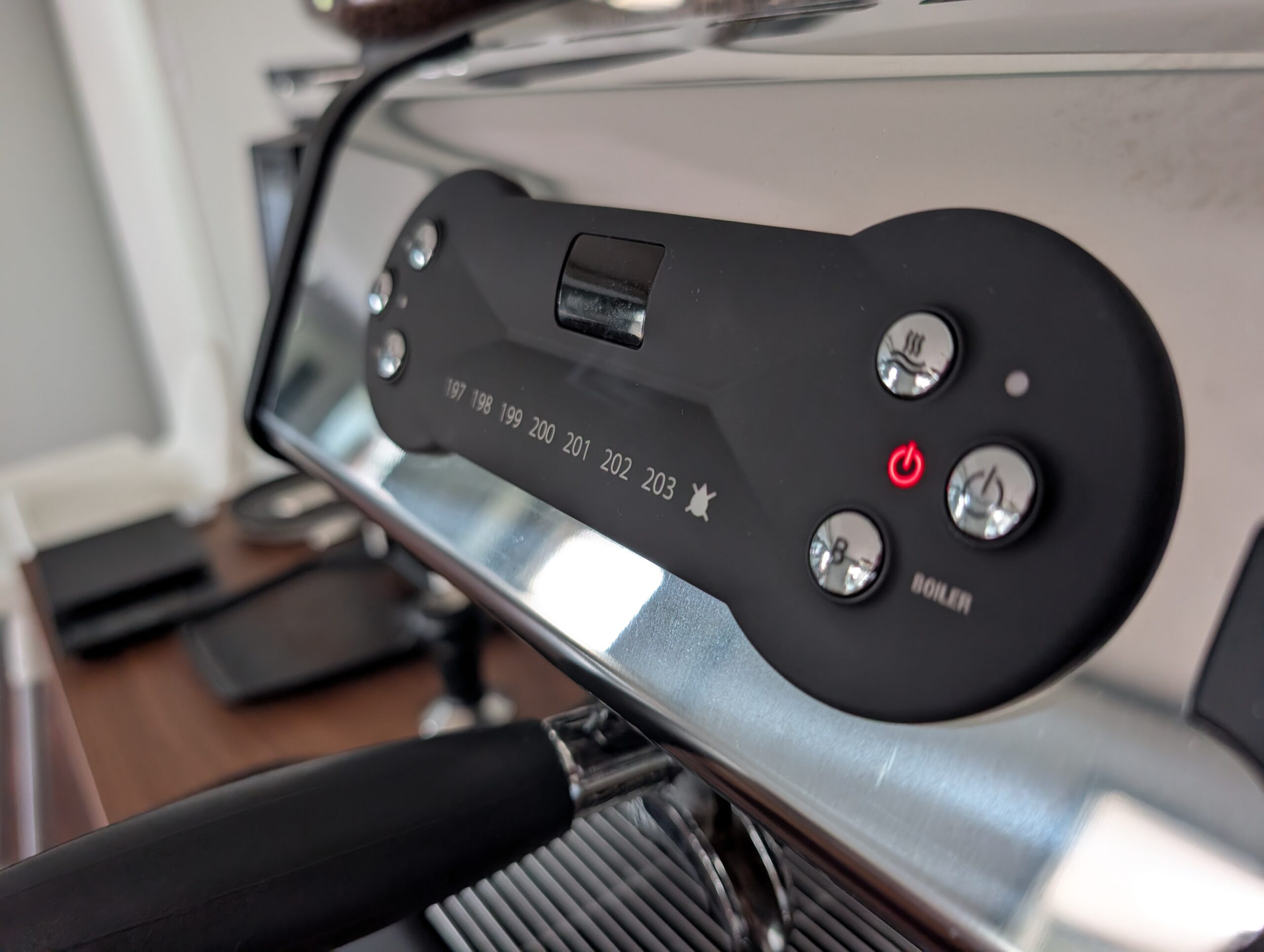
- Built-in timer for measuring shot output
- Dedicated “flush water” button
This matters a lot more when you’re serving guests versus making one or two drinks at home.
2. Rotary Pump = Immediate Upgrade
One of the most important upgrades in the Pro is the rotary pump, compared to the vibration pump in the Mini.
What that means in practice:
- Much quieter operation
- More consistent pressure during extraction
- Better suited for back-to-back drinks
For events, this is huge. The machine just feels calmer and more controlled under pressure. However, we did notice that it takes longer for both boilers to become fully heated and operational: at least 20 minutes. The boiler buttons for both blink and refill more often, most likely due to the bigger size of each needing more consistent heating to stay at temp.
3. Designed for Plumbed Use (But Still Flexible)
The A53 Pro is designed to be plumbed into a water line, which is a major step toward commercial functionality.
That said, you can still run it with a reservoir setup depending on your configuration—making it flexible enough for:
- Coffee carts
- Catering setups
- Small café counters
This flexibility is one of the reasons we chose it. We still have the reservoir setup because it decreases points of failure during weekly espresso bar events.
Small Details That Actually Made a Difference
There were a few smaller design changes on the A53 Pro that ended up having a bigger impact on our day-to-day workflow than we expected.
Taller Clearance + Under-Bar Lighting (A Quiet Win)
One of the first things we noticed—and honestly didn’t expect to appreciate as much as we did—was the increased height under the group head.
On the Mini, cup clearance could feel a little tight, especially when trying to move quickly during service. With the Pro, we can comfortably fit cups directly under the portafilter without any awkward maneuvering.
Paired with the built-in under-bar light, it makes a noticeable difference:
- Easier to see shot quality while pulling
- Smoother workflow during events
- Just feels more like a true café setup
It’s one of those subtle upgrades that you don’t think about until you have it—and then wouldn’t want to go without.
The Portafilter & Tamp: A Bit of a Letdown
If there’s one area where we were genuinely surprised (and not in a good way), it’s the included accessories.
The portafilter that came with the Pro felt:
- Lighter
- More plasticky
- Overall less durable than expected
Same goes for the tamp—it just didn’t match the level of the machine itself.
Considering the Pro comes at a higher price point, we were honestly expecting these components to feel more premium, especially since durability matters for how we use this machine in a business setting.
We ended up swapping them out immediately for the heavier portafilter and metal tamp from our A53 Mini, which felt much more in line with what we’d expect at this level.
A Funny Adjustment: Everything Is… Reversed
There were also a couple of small quirks that threw us off at first:
- The steam wand is on the right side instead of the left
- The temperature display is in Fahrenheit instead of Celsius
Neither of these are issues—but they do require a bit of retraining, especially when you’ve built muscle memory on a different machine.
The steam wand switch, in particular, meant adjusting our entire flow behind the bar. Not a big deal long-term, but definitely a funny “wait a second…” moment during the first few uses.
Specs & Features: What Sets the A53 Pro Apart
Here’s what really defines the A53 Pro and why it stands out in this price range.
Dual Boiler System (Non-Negotiable at This Level)
Like the Mini, the Pro uses a dual boiler system, allowing you to:
- Pull espresso shots
- Steam milk simultaneously
But the difference here is consistency under load.
During events, we can run drinks continuously without the machine struggling to keep up.
Volumetric Programming for Consistency
The programmable buttons allow for:
- Consistent shot volumes
- Faster workflow during events
- Less reliance on manual timing
For catering, this is essential. It keeps drinks consistent even when you’re moving quickly.
Commercial-Grade Steam Power
If the Mini impressed us with steam power, the Pro takes it a step further.
You get:
- Faster milk steaming
- Better microfoam texture
- More control for latte art
This is where the machine really starts to feel like something you’d see behind a café bar. I was really shocked at how much stronger it whisks the milk!
NSF Certification (A Big Deal for Businesses)
One of the most important differences:
The A53 Pro is NSF certified.
This matters if you’re:
- Working with venues
- Operating in regulated environments
- Expanding into more formal food service settings
- Vetting general liability insurance
It’s a key step toward legitimacy as a business.
Real-World Use: Why We Made This Our Main Machine
After using both machines, the decision became pretty obvious.
The Mini is excellent—but the Pro is built for reliability under pressure.
Where the Pro Wins for Us:
- Better for events with continuous drink flow
- More confidence during high-pressure service
- Quieter operation (huge in indoor venues)
- Feels more “set up for success” long-term
We now run:
- A53 Pro = primary machine
- A53 Mini = backup machine
And that combination has been ideal.
What You Still Need (Don’t Skip This)
Just like the Mini, the A53 Pro requires a proper setup to perform at its best.
1. A High-End Grinder
This is non-negotiable.
If you’re investing in a machine like this, you should also be using:
- Eureka Mignon Specialita
- Mazzer Mini
- Or similar quality grinder
Without it, you won’t get the performance you’re paying for. We still use the Anfim Luna and it comes highly recommended! As we weighed out the time-based shots to dial in this new machine, it was still spot on down to the .1 gram.
2. Water Filtration
After our experience with the Mini, this is something we take seriously.
- Use filtered water
- Follow descaling instructions carefully
- Don’t cut corners on maintenance
This machine will last—but only if you take care of it.
Who Is the A53 Pro Best For?
This machine isn’t for everyone—and that’s a good thing.
1. Coffee Catering & Mobile Espresso Bars
This is exactly where the A53 Pro shines.
If you’re:
- Running events
- Serving dozens (or hundreds) of drinks
- Need reliability and speed
This machine hits the sweet spot between portability and performance.
2. Small Cafés or Part-Time Coffee Service
Perfect for:
- Church coffee stations
- Office cafés
- Boutique spaces
It delivers true espresso quality without requiring a massive commercial setup.
3. Serious Home Baristas (With Intent)
If you’re someone who:
- Makes multiple drinks daily
- Hosts often
- Wants café-level performance at home
This is a long-term investment that makes sense.
Final Thoughts: Is the Lucca A53 Pro Worth It?
After upgrading from the Mini, the answer for us is clearly yes.
The A53 Pro delivers:
- More consistent performance under load
- Quieter, smoother operation with a rotary pump
- Commercial-level steam power
- NSF certification for business use
- Long-term reliability with proper maintenance
The Honest Tradeoffs
- Higher price point than the Mini
- Requires proper setup (grinder, water, maintenance)
- Less “plug-and-play” than entry-level machines
Our Recommendation
If you’re choosing between the Mini and the Pro:
- Go with the Mini if you’re primarily a home user
- Go with the Pro if you’re serving other people regularly
For us, once coffee became part of our business, the upgrade wasn’t just nice: it was necessary.
Jacob Bargo is a co-owner of Carmel Coffee Catering, a mobile espresso and coffee bar service for weddings, corporate events, and private parties throughout Carmel and the greater Indianapolis area. He builds the systems behind the service: sourcing, logistics, and the operational side of running high-volume coffee bars on site. A software engineer by trade and an Indiana University alum, he pairs business thinking with a relentless enthusiasm for coffee culture.